One of the earliest and perhaps also the most well-known reflex is the Moro or startle reflex (see picture to R). It should be extinguished by the age of 5 months.

A series of survival reflexes that every baby is born with, directed by the brain stem, and essential to understand for healthy child development
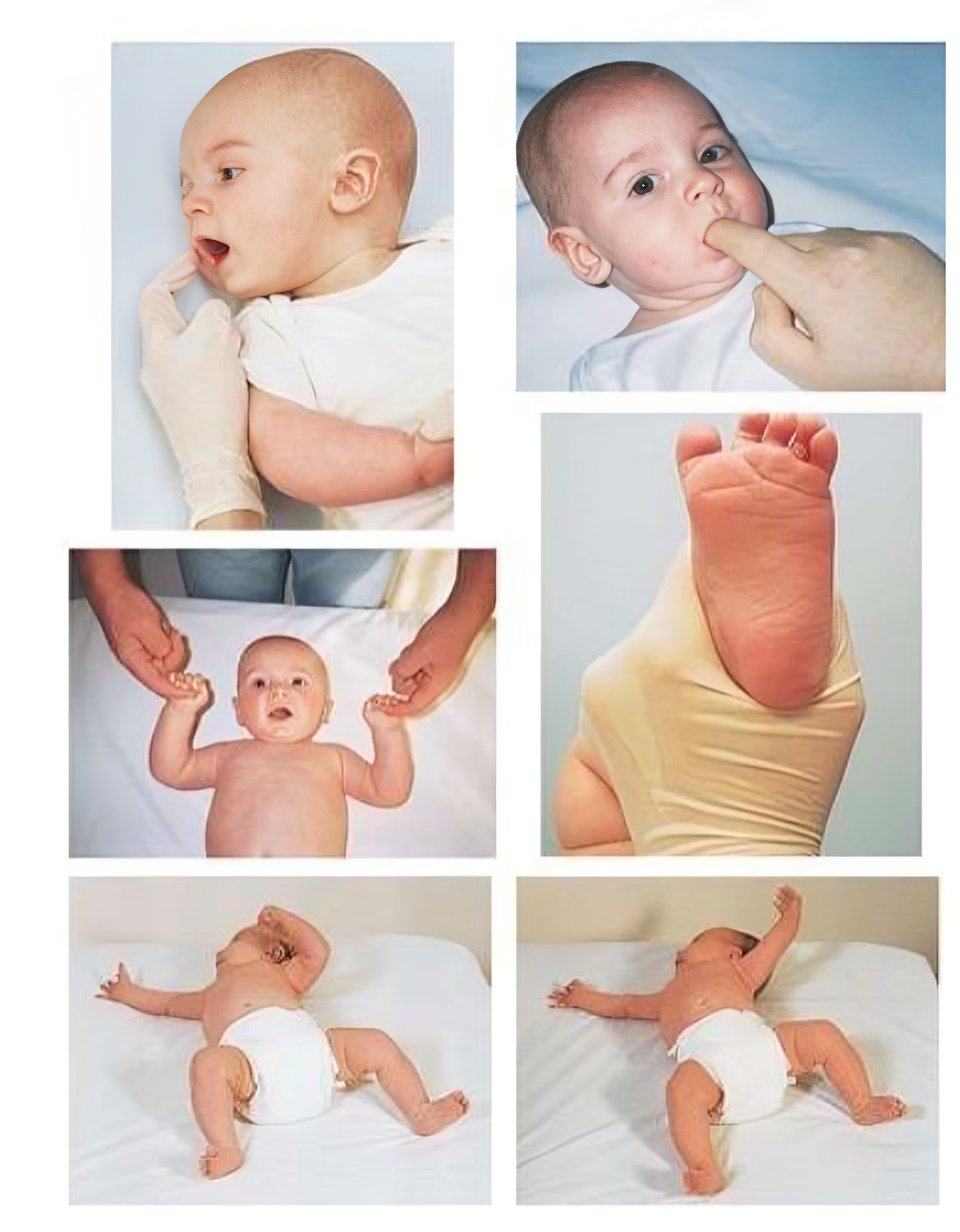
Primitive Reflexes are a series of survival reflexes that every baby is born with. They are directed by the brain stem and the newborn has no control over them.
These reflexes should be extinguished by 6-12 months of life, so that the child can develop voluntary control over its movements.
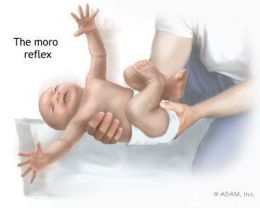
One of the earliest and perhaps also the most well-known reflex is the Moro or startle reflex (see picture to R). It should be extinguished by the age of 5 months.

Another well-known reflex is the Asymmetrical Tonic Neck Reflex (ATNR), which develops in the 18th week in utero. It should be extinguished by 6 months of age, so that a child can learn to bring two hands together in the midline, regardless of the position of the head.
When these primitive reflexes are retained past 12 months, they usually interfere with normal development of movement, balance, muscle tone, tracking of the eyes, eye hand coordination, speech development, learning, attention, mood and behaviour.
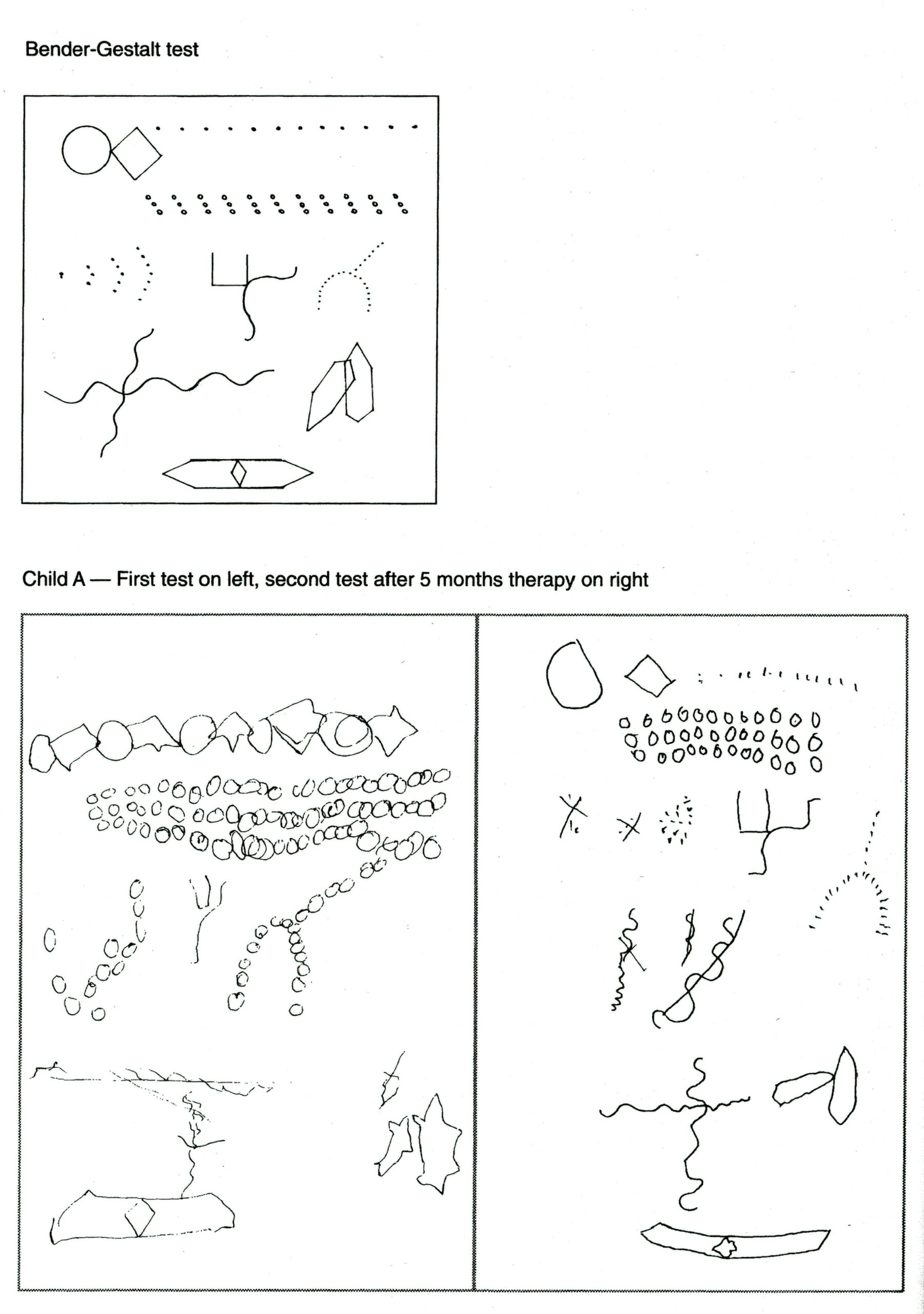
Primitive Reflexes can be tested at any age to assess whether any of them are still partly or completely retained. Two suitable tests that are easy to do with school-aged children, are the Tansley and Bender-Gestalt test.
A case study: Max, 7 years old
The pictures below are from a 7-year-old boy called Max, who had learning, writing, concentration, retention and Mental Maths difficulties.
I saw Max for the first time in December 2011. His history: elective C-section at birth, asthmatic type wheeze as a baby, recurrent tonsillitis for which he received antibiotics 12 times by the time he was 2½ years old, a tonsillectomy at 3½ years, he had a problem with some preservatives and his skin felt tight and was so sensitive that they couldn't put sunscreen on. He wrote many reversals (b for d). He had memory blanks, low confidence, had trouble organising his personal space, eating habits were messy and he became frustrated when he had to learn new things. Getting him to do his homework was a daily drama.
I did a reading test and found his reading level to be above his age level. Given his history, I put him on a gluten free diet, changed the milk to A2 and gave him some Brain Gym® exercises to do on a daily basis.
On the second session, I did a Phonological discrimination and conceptualisation test and he again performed above his age, which was in line with his brain Dominance Profile. I did a brain integration process to integrate both hemispheres of the brain to prepare the brain for whole brain learning. He continued with the Brain Gym® exercises, the diet was nearly completely gluten-free and I gave him some probiotics and gut repair supplements.
On the third session, I did a Maths test where he performed less than his chronological age. I then did a sensory integration process to help with preparing his brain for Mental Maths. I also did a zinc taste test, which showed that he was a little bit deficient in zinc, so I made up an individualised (activated) vitamins and minerals mix and selected a probiotic for him to improve his gut health.
On the 4th session (31st January) he did the Tansley and Bender test and the writing samples. I did a Neuro-developmental therapy session to improve his neural organisation. I also added some Brain Gym® exercises for writing and he continued with the diet and the nutritional supplements. His mother said that his skin nearly felt normal and sunscreen can be put on easily now. His concentration had improved as well.
On the 5th and last session (28th February), I made a herb mix for him and we selected a different probiotic. I gave him another Neuro-developmental therapy session and then I repeated the Tansley and Bender-Gestalt test and the writing samples.
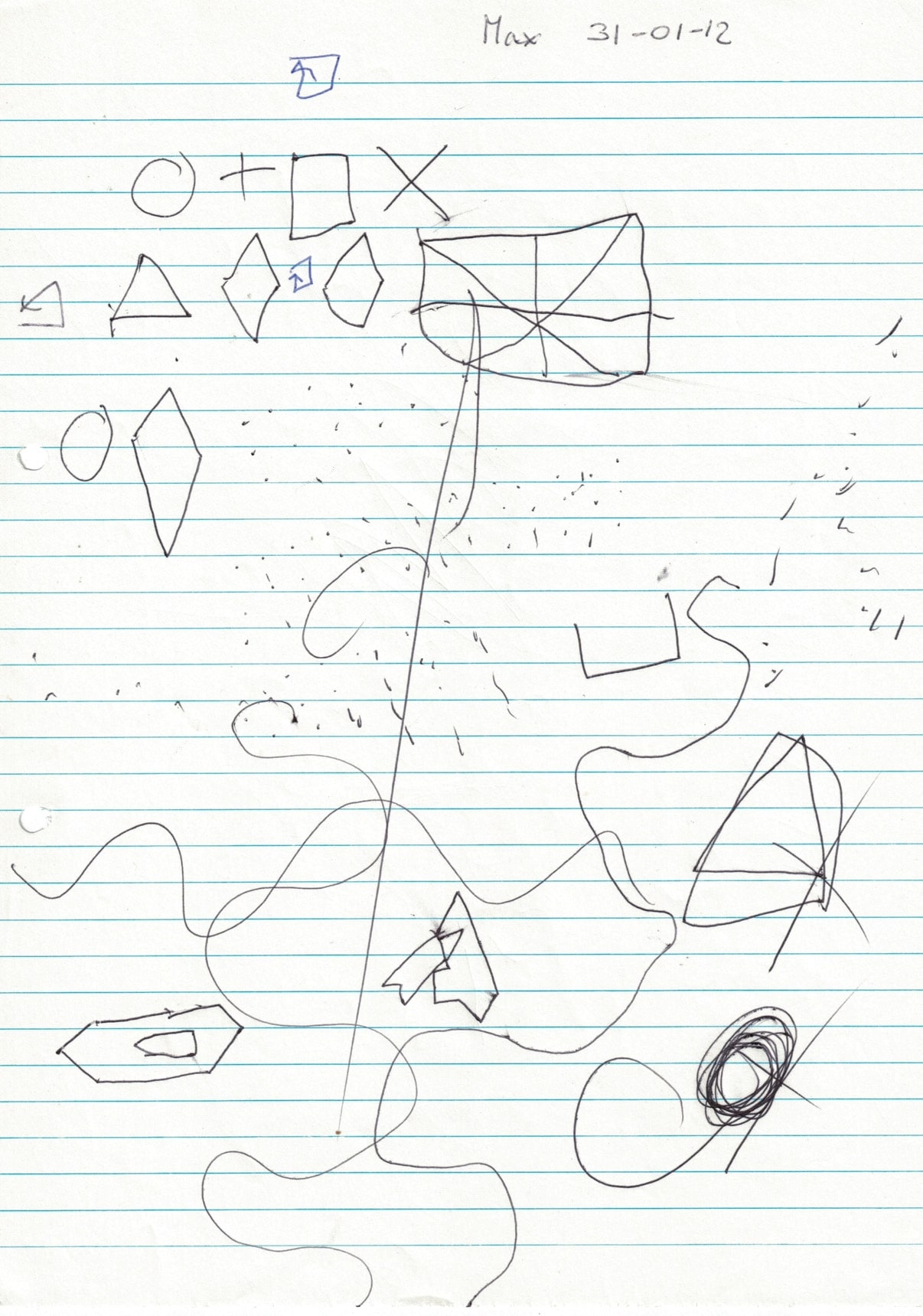 Max's writing on 31-01-2012
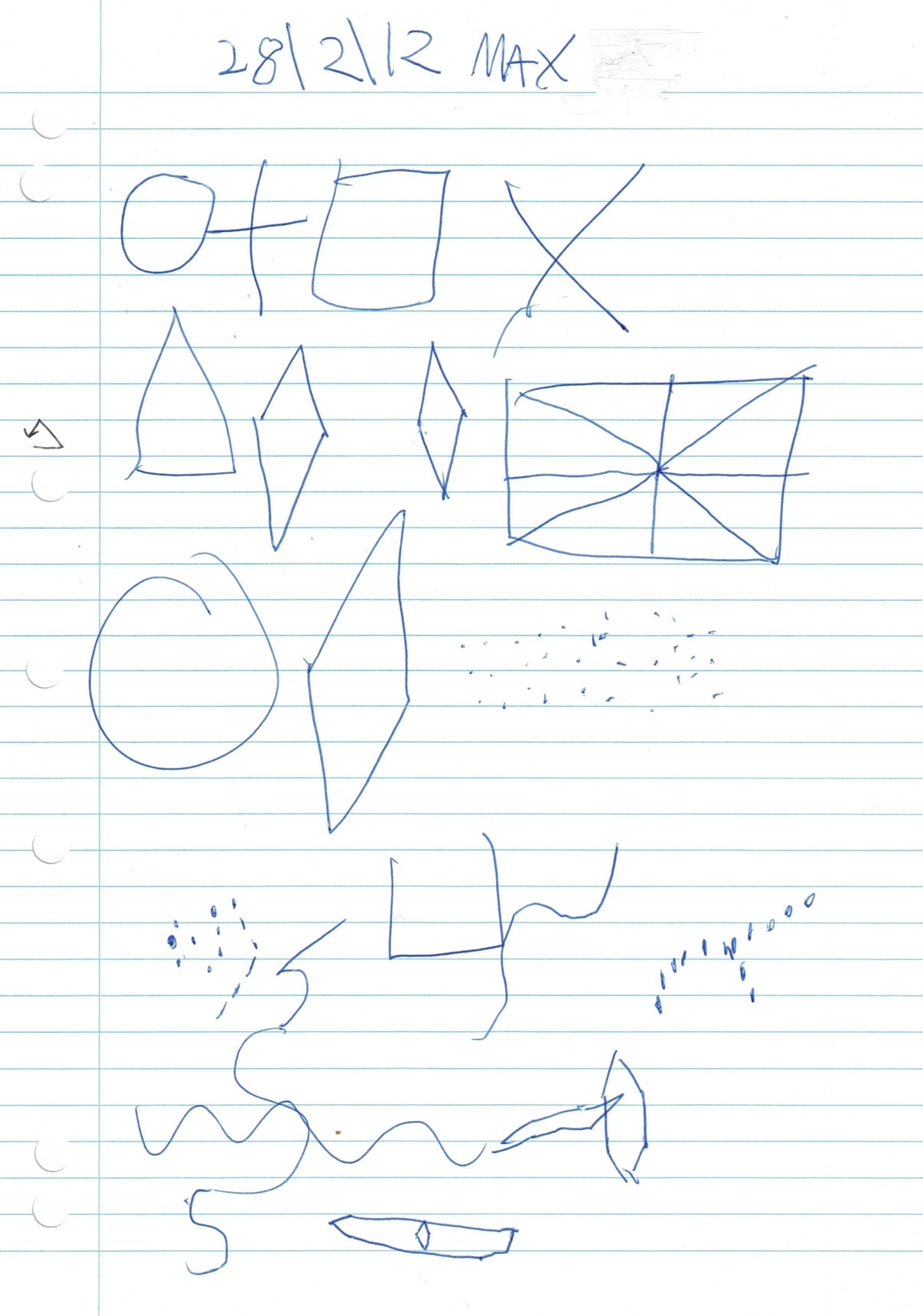 Max's writing on 28-02-2012
The two pictures above show the writing samples also taken on the 4th and the 5th session.