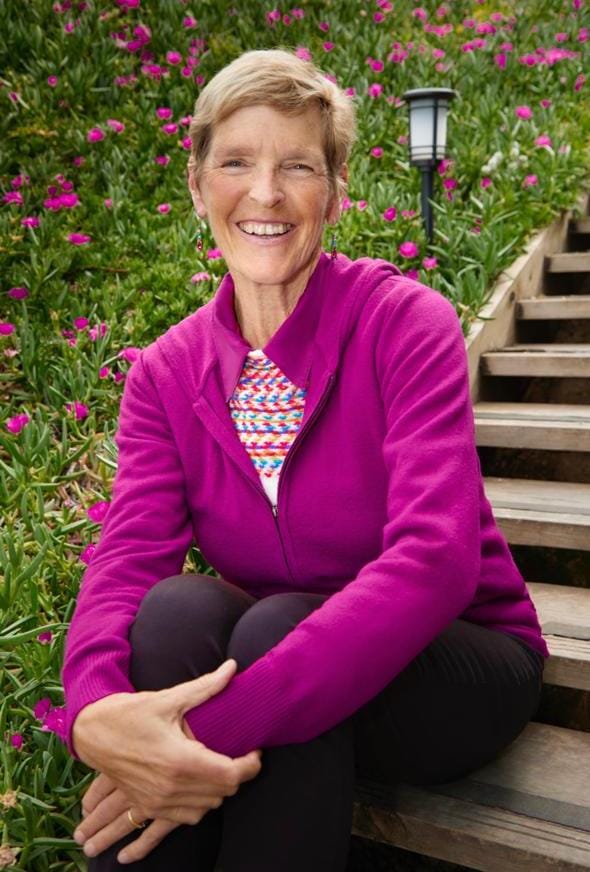
My name is Anke Koelman. I was born in Leeuwarden, the capital of Friesland, in the Netherlands. I grew up as the oldest of 4 girls and I was fortunate to have a happy, healthy and active childhood.
During my high school years, I was overweight and became very interested in finding out why one person can gain weight and another could lose weight whilst on the same diet. Given a choice, I would have studied Nutrition Medicine at the university, but that was not an option at the time, so I decided to pursue a master's degree in Biochemistry, Mathematics and Theory of Education and to become a teacher.
In 1979 I married my ex-husband Wim, who had a job in the oil industry. Shortly thereafter we were transferred to Egypt, where I applied for a job at the American University in Cairo, teaching mathematics. Unfortunately, the day I heard that I had won the position, I also heard that we were relocated to Houston, Texas, so I was unable to take up the position.
However, it did help me to gain a position at the Houston Baptist University as an assistant professor, teaching courses in mathematics and organic chemistry labs. Whilst we were in Houston, our first son, Onno, was born.
After 2 years, we were moved to Aberdeen, UK, where our daughter, Elke, was born. Whilst in Aberdeen, I taught biochemistry labs at the College of Agriculture and the University of Aberdeen.
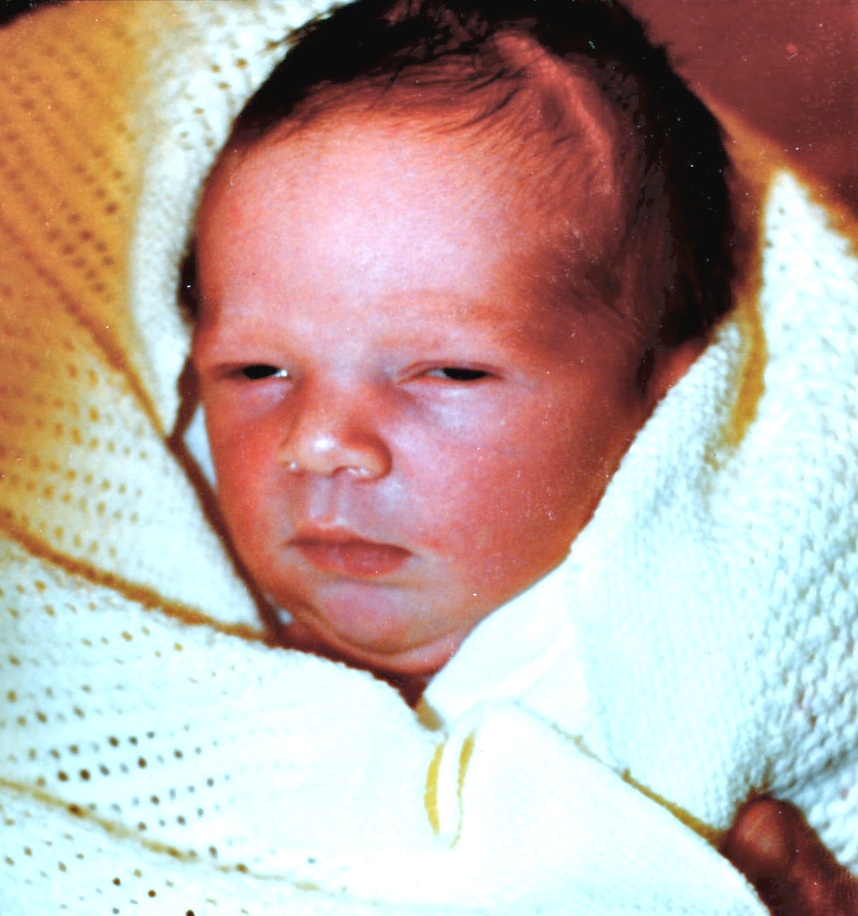
In 1984 we were relocated to Adelaide, where soon after we arrived our third child, Friso, was born. Sadly, Friso was in a coma when he was born and barely alive. For several days he remained in a coma, but on the 4th day I took a series of pictures of him, using the flash on my camera and he suddenly opened his eyes. It was a promising start. Unfortunately, he had suffered such severe brain damage in the womb, that when he came out of the coma, he could not cry or suckle, he was profoundly deaf, had no pupil reflex and no sense of taste or smell. A few months later, he was diagnosed with severe spastic quadriplegia.
The doctor told me that there was no pill or known cure for his condition, but I wanted to do whatever I could to help him improve, so I embarked on a journey to find out what could be done to improve his brain function.
I investigated many practical approaches from all over the world and vowed that if a technique had a beneficial effect on him, I would study the technique in more depth, so that I could do it with him at home and later on help other children as well.
I discovered that there was a programme that was used in the USA to help children and adults recover from brain injuries. It was called the Doman-Delacato programme and it involved intensive sensory stimulation as well as various "patterning" movements. It sounded like a good starting point for Friso and we were lucky to find Ian Hunter, a Physiotherapist who was trained in this programme and who lived in Australia.
He designed an exercise programme for Friso, which had to be done 4 hours a day, 6 days a week!
I had only just arrived in a foreign country, where I didn't know anyone and I also had 2 young children, so I was wondering how I could possibly pursue this Delacato programme. Fortunately, through a local church and mothers of Onno's kindergarten, I was very blessed to find a wonderful group of volunteers that helped us with Friso's programme. We followed this programme for 5 years and some volunteers stayed for the full 5 years!
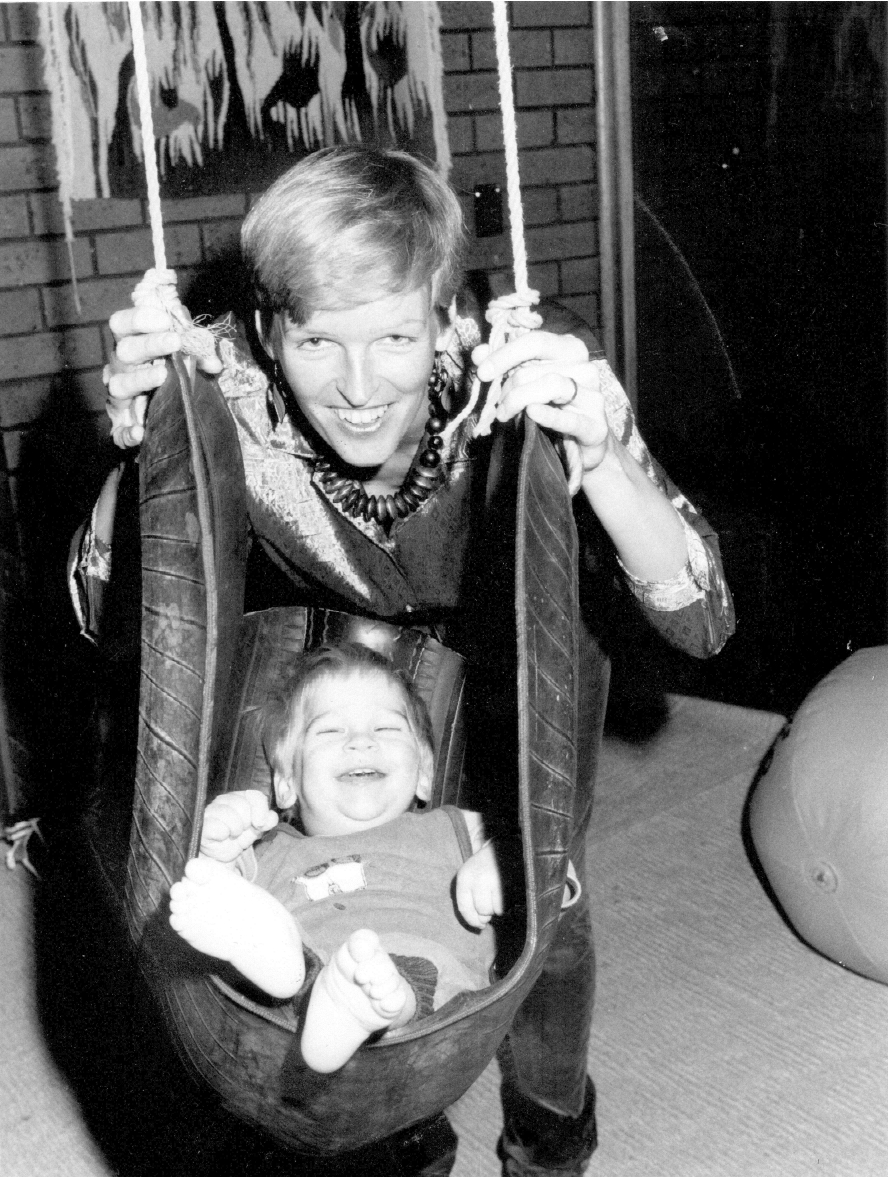
A year later, when he was nearly 2 years old, Friso had an assessment at the Children's hospital. The results were amazing. His hearing was tested thoroughly and this time it was found to be normal! On top of that, his pupil reflex and sense of smell had "come back" and he was able to cry, suck, chew and could indicate "yes" and "no" answers to us.
Because of Friso's high degree of spasticity, it was very difficult to move his legs during the patterning movements. However, whilst studying Suggestopedia (Superlearning) in 1987, I discovered that if we played the "Superlearning" music during the exercises, his body was able to relax, so that it was easier for him and the volunteers to do the exercises.
Over the next decade, I noticed that more and more children were diagnosed with AD(H)D and I found that many of them reacted to sugar and food additives, so I started to include food testing in my consultations.
Sadly, Friso died shortly before his 8th birthday. Shortly thereafter, I was offered a position at a private school, teaching mathematics to year 11 and 12 students, which was very tempting. However, I felt that if I returned to teaching, his whole life would have been for nothing, so I decided to stay on the path I was now on and continue my journey on learning new therapies to improve brain function.

After following the patterning programme for 2 years, a friend suggested that Friso could possibly benefit from a repatterning process, which was part of the Educational Kinesiology (Edu-K) programme. Shortly thereafter, Friso had a session with a Kinesiologist, who performed the Dennison Laterality Repatterning Process (DLR). The DLR is an Integration Process that enhances integration between the left and right side of the brain. The effects were almost immediate. The volunteers noticed that he became more and more alert and he was able to learn better. I therefore decided to take the Basic Edu-K and Touch For Health (TFH) courses, curious to learn more.
One of the volunteers had a son called Chris who was repeating year 2. He had problems with writing, especially story writing. After that initial Kinesiology course, I wanted to practise what I had learnt, so I did some Brain Gym® exercises for writing with Chris, followed by the DLR, or the brain Integration Process. After 3 sessions, his writing had improved to the point that he no longer used capital letters where they did not belong, stopped making reversals (b for d), improved the spacing between the letters and his spelling was no longer phonetic. He also started writing stories with illustrations, instead of his usual one-liners.
His mother and teacher were very impressed by the results and so was I, therefore I decided to do further training and in 1988 I became a Consultant and Instructor in Educational Kinesiology and I started to work professionally with children who had Dyslexia and other learning problems.
At the beginning of the 21st Century, Autism and Autism Spectrum Disorders (ASD) became more prevalent. It seemed that the brain was under attack from many toxins causing the brain to be inflamed.
Brain inflammation plays a major role in the disruption of neural networks, which in turn can result in neuro-developmental delay, autism and autism spectrum disorders, changes in mood, speech and language delay, AD(H)D, learning and behaviour problems, as well as neuro-degenerative disorders such as Alzheimer's and Parkinson's disease. The worse the inflammation, the worse the brain is affected, so knowing how to reduce the inflammation was key.
I felt that in order to be able to deal more successfully with Autism and Autism Spectrum Disorders, (food) allergies and the effect of environmental) toxins on the brain, I needed to learn more.
In 2001 the University of New England (Armidale, NSW) was the first University in Australia to offer a Master's degree in health sciences (Nutrition Medicine). This was exactly what I had wanted to study in the '70s, so I enrolled in the very first course and was fortunate to be accepted, as I did not come from a medical or naturopathic background.
During my master's degree study, I learnt more about the turnover of nutrients (Metabolism) on a cellular level and how the body deals with toxins. As I came from a background in Biochemistry, I loved learning about how both illness and wellness are created on a cellular level and many things started to make a lot more sense. I discovered that it was Friso's diet that had caused his recurrent bronchial infections and that it was the many courses of antibiotics he had received for this that had caused his severe chronic constipation.
During my postgraduate study in Nutrition Medicine, I was very honoured to win the scholarship prize of the South Australian Chapter of the University of New England Alumni Association for Academic Excellence for two consecutive years and on completion of my Master's degree in 2005 I was very proud to receive the "Dean's Merit Award".
When I started working with children on the Spectrum, I realised that there were some common underlying genetic predispositions that, when accompanied by a high load of toxins and poor gut health, could lead to Autism or Autism Spectrum Disorders (ASD). Therefore, in order to address the cause(s) of these conditions, I needed to learn how to identify and reduce the number of toxins and how to improve gut health, so I decided to study Naturopathy, Herbal Medicine and Homeopathy to gather more tools.
As a result of studying these modalities, I did gain a lot of new tools, especially with regards to removing toxins, but I also found out that reversing Autism is a very complicated and highly specialised process. This required additional skills that were not taught at any university or naturopathic college.
New research had confirmed the importance of the brain-gut connection for the regression into autism. I was shocked to see videos of previously healthy children, who then suddenly regressed into autism and I became passionate about finding out whether and how this process could be reversed. It seemed logical to me, that if poor gut health could cause poor brain health, then good gut health should be resulting in good brain health. As Hippocrates had already stated in 400BC: "All disease begins and ends in the gut", so I wondered where I could learn more about the brain-gut connection?
In Australia, we are fortunate to have Leslie Embersits, who founded the MINDD organisation (www.mindd.org, which stands for Metabolic, Immunologic, Neurologic and Digestive Disorders, such as Autism and Autism Spectrum Disorders, but also other chronic childhood disorders such as Asthma, AD(H)D, Allergies and food sensitivities. She organised yearly or biannual International Forums for parents and practitioners to learn about the latest treatments for MINDD from internationally renowned specialists in the treatment of autism.
These specialists included Dr. Natasha McBride (UK), Donna Gates (USA), Julie Matthews (USA) and specialist paediatricians from USA such as Dr. Elizabeth Mumper, Dr. Nancy O'Hara and Dr. Elisa Song. They showed us that Autism and ASD can be reversed and taught practitioners how they had achieved this.
At the MINDD Forums Parents and Practitioners were offered different programmes that were tailored to their individual needs. For example, I have given several presentations to the parents on the benefits of Brain Gym®, whereas as a practitioner, I have attended many advanced practitioner training courses organised and presented by MAPS (Medical Academy of Paediatric Special Needs: medmaps.org) to acquire more in-depth skills on topics such as: DNA testing, Functional Pathology testing, the Biomedical approach, the gut-brain connection, Environmental Medicine and the significance of the MTHFR gene mutations for Autism, Alzheimer's and other neuro-inflammatory conditions.
The COVID-19 Pandemic unfortunately put a stop to these Forums, but in 2025 it was held again live in Sydney and it will be held again in 2026, where I also will be a presenter. Specialised Webinars via Zoom have also proven to be an excellent way of finding out about the latest research on the reversal of Autism and other chronic conditions from experts across the world. If you would like to receive notifications of these (free) Webinars, please email me: akoelman@ozemail.com.au and I will add your email address to my webinar notification list or you can follow me on my Facebook pages: Help with Autism and Optimum Learning & Health Centre, where I will post any upcoming free webinars and research studies that I think will be of interest to you.
In conclusion, reversing the course of autism regression has been the most challenging as well as most rewarding experience of my professional life. The feeling you get when a child stops squealing or stimming and starts talking (again) or gives you a hug for the first time is incredible. Sometimes this happened within a week after receiving certain individualised targeted supplements to support their genetic weaknesses (Targeted Individualised Nutrition Therapy for the Recovery of Autism & ASD (TINTRA)). This feeling has motivated me to keep going and keep learning more.
Autism is often seen as "a condition that can only be managed, because it cannot be changed, let alone be reversed". However, at the MINDD practitioner trainings I have seen many videos of children who did recover from Autism. Seeing is believing and when you know that it can be done, as a practitioner, it then becomes a matter of finding out how. In a nutshell, this means we need to find out and address/remove whatever was causing harm and add whatever is needed to assist in the recovery process.
The recovery process is a journey. This journey is different for each child as every case of Autism has different cause(s). Autism Recovery involves a combination of many techniques and therapies. It requires a commitment by the parents and a willingness to change, whatever needs to be changed, e.g. the diet, environment, habits etc. However, the results can be profound and intensely rewarding.
When a child, who was severely autistic, can now attend a normal school (without a full-time carer by his side) and is successful in following the mainstream curriculum, you know it can be done and that the whole journey was well worth it! Then, when the mother of this child tells you that he has just been selected as the youngest person to represent his school in an interschool technology conference, where he needs to give a presentation about his own creation to 100 people, it is a proud moment for the parents and the icing on the cake for everyone involved!
Early intervention is key, but the question is, what therapy will intervene best in the case of regressive Autism? Starting with behavioural therapies that work from the outside-in, such as occupational therapy or speech therapy won't have a lot of benefit as long as the brain is still inflamed and it won't do anything to reduce the inflammation either. A recent research study showed that children on the Autism Spectrum have more inflammation than neuro-typical children. There can be many reasons for this inflammation and they can be different for each child, so the first priority is to identify and address the cause(s) of this inflammation, so that the fire can be put out and the brain can be "rebuilt". This means we need to start by working from the inside-out. For this purpose, I have developed Autism Recovery Therapy (ART). It is a culmination of all the techniques and modalities that have shown to be successful in improving brain, immune and gut function in children who are on the Autism Spectrum or have any of the abovementioned MINDD conditions.
The saying: "If you have seen one child with autism, you have seen one child with autism", implies that randomised controlled studies are not possible for autism recovery therapies, as no two children are alike.
However, it is possible and far more meaningful in my opinion, to do an in-depth case study of one autistic child, that shows:
Therefore, I have decided to write a series of case histories of the children I have worked with, starting with a case history of a 3-year-old boy, who was diagnosed with severe autism (level 3). You will be able to see the lab reports of this child's DNA mutations and his level of toxins and toxicants (man-made toxins) when I first saw him and again after 3 and 4 years of Autism Recovery Therapy (ART) alongside the corresponding improvements in neuro-development, learning and behaviour.
It is my belief that every child on the Autism Spectrum deserves a chance to receive Autism Recovery Therapy. This is the early intervention that a child on the Autism spectrum needs and the sooner this is started, the better. Starting with any therapy that works from the outside-in whilst the brain is still on fire is a waste of money and valuable time, as important developmental windows in the brain will be missed and often lost forever.
The testing and nutritional supplementation required to recover a child from Autism is expensive for most young families, but for the government it will be the better option, as the cost of recovering a child from Autism is a drop in the ocean, compared to the money they will need to spend on "managing" the condition in the future, often for the rest of a child's life.
Anke Koelman